


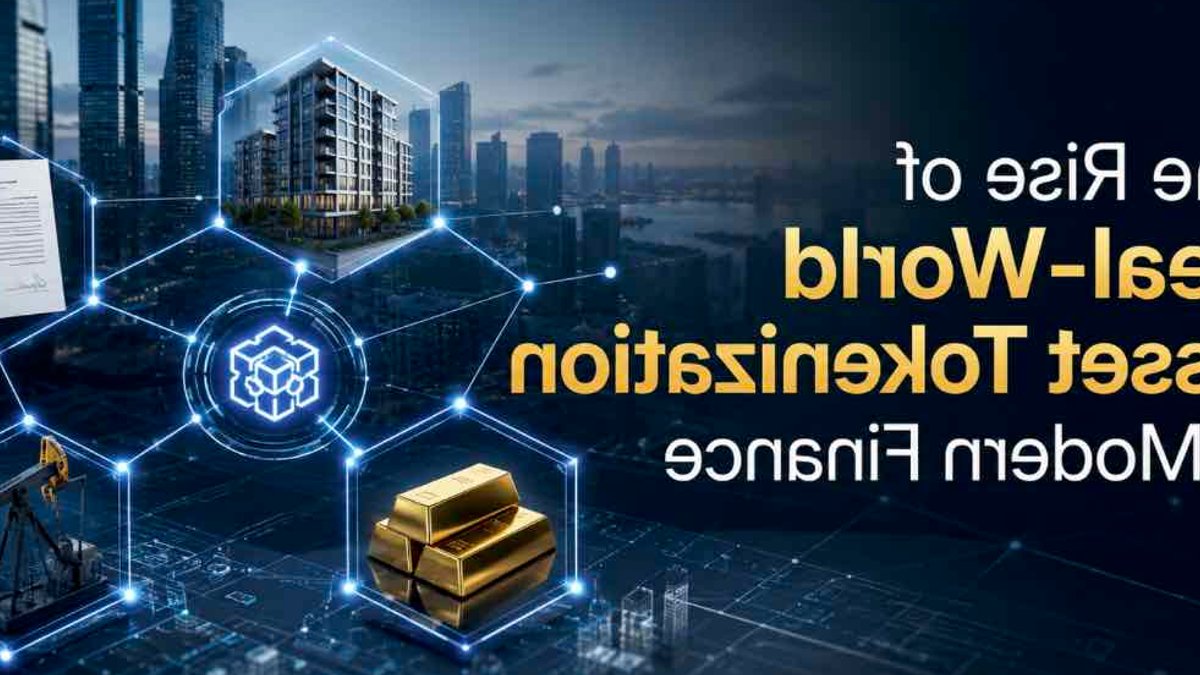
Real-world asset tokenization is transforming how traditional investments are managed, moving beyond simple cryptocurrencies to encompass real estate, private credit, and commodities on blockchain networks. The process involves creating digital tokens that represent economic interests in physical assets, allowing ownership to be divided into smaller, more accessible units. This shift represents a bridge connecting conventional financial markets with the digital economy, offering a new way to handle ownership rights.
Tokenization unlocks liquidity in markets that are traditionally frozen. Large, illiquid assets like commercial real estate or infrastructure projects can be broken down into smaller investment interests. This fractional ownership model reduces the capital required for entry, allowing a wider pool of eligible investors to participate. It also introduces greater transparency, as blockchain networks can track token ownership and transactions on a shared digital ledger.
The Technical Framework
A tokenization project typically begins with asset selection, where a company identifies an asset to be represented digitally and determines the specific economic rights to be tokenized. This is followed by legal structuring, which establishes relationships between the asset, the issuing entity, and the token holders. Once the asset is valued, tokens are created on a blockchain according to rules regarding ownership claims and transfer. The process also requires strict compliance and Know Your Customer (KYC) verification to meet Anti-Money Laundering (AML) regulations and applicable securities laws.
The creation of tokens is just one part of the equation. A token has little value unless it is backed by legal rights to the underlying asset, a high-quality investment, and proper compliance structures. This means tokenization is not just a technological feat but a complex legal and financial framework that requires careful attention to detail. If the legal basis is weak or the asset is poorly defined, the digital representation fails to hold value in the real world.
Related: AI boosts visibility in July EIN updates
Efficiency and Automation
Operational efficiency is another key benefit. Smart contracts can automate ownership transfers and income distributions, removing much of the manual work associated with traditional record-keeping. This automation, combined with standardized transfer protocols, creates the potential for compliant secondary markets where assets can be traded more easily. However, the source text cautions that this liquidity is not automatic; it depends on adequate demand and a functioning market infrastructure.
Real Estate Applications
The most common example of this technology is found in real estate, where tokenization allows a property worth $10 million to be divided into thousands of digital units. In a traditional scenario, a buyer would need significant capital to purchase the entire asset. With tokenization, an investor might buy a token representing a 100 Euro stake in the property. This approach democratizes access to high-value investments, provided the investor meets the offering’s eligibility requirements.
While this digital representation offers a way to control defined investment interests, it is not a replacement for the complex legalities of land ownership. Tokenization services provide the necessary infrastructure to handle these digital tokens, ensuring that the technology supports rather than supplants existing legal frameworks. The success of these models relies on a symbiotic relationship between blockchain technology and the underlying real-world asset.
Investors looking to expand their portfolio beyond standard financial instruments might consider exploring alternative methods for earning digital currency or rewards. One such method involves earning free gift cards online, a process that simplifies earning free gift cards through dedicated platforms.


