


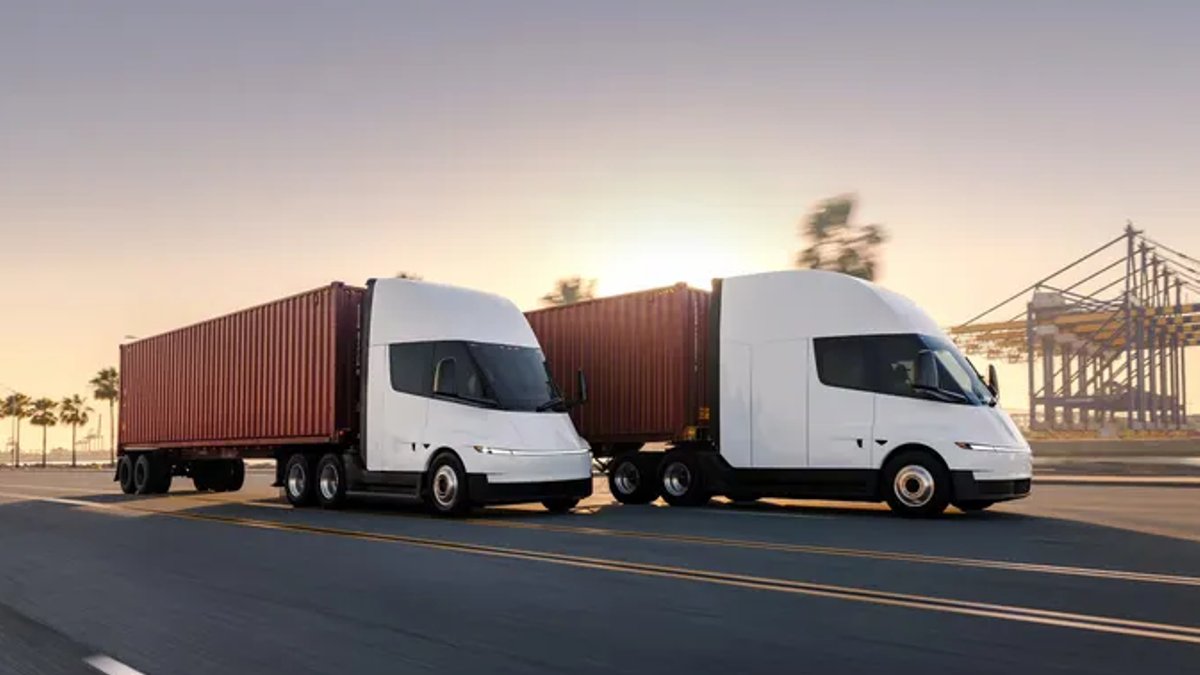
A group of cargo-owning companies has ordered 2,500 battery-electric Class 8 trucks to support the broader adoption of zero-emission commercial vehicles. Participating shippers in the initiative include Ikea, Red Bull, Microsoft, and PepsiCo. The purchase is being coordinated through the Zero-Emission Truck Shipper-Carrier Alliance Leading Electrification (ZET SCALE), a program jointly managed by Catalyst Mobility and the Smart Freight Centre.
Aggregating Demand to Lower Costs
Tesla will serve as the main manufacturer for the first batch of the 2,500 trucks, while Volvo, Kenworth, and RIDE have been named as secondary suppliers. By pooling orders through ZET SCALE, buyers aim to reduce per-unit costs. According to Michael Berube, president and CEO of Catalyst Mobility, aggregating demand allows manufacturers to offer better pricing, which is critical since buying heavy-duty electric trucks can be costly for companies focused on cutting emissions.
Nico De Golia, Microsoft’s director of sustainability for cloud supply chain global operations, emphasized in a statement that this strategy turns “sustainability commitments into operational reality.” He added that joining ZET SCALE demonstrates strong market interest in electric trucks, making greener freight options more viable for transporting cloud-based services.
Read Also: Engineers India Shares Rise Ahead of Dividend
ZET Financial, a dedicated financing firm, is handling the procurement of the 2,500 vehicles. As noted by Cristiano Façanha, North America’s head of road freight electrification at Smart Freight Centre, businesses can rent the trucks via a leasing arrangement offered by ZET Financial. These firms then contract with approved carriers operating the electric fleet, allowing them to take advantage of lower shipping costs and reduced emissions.
Focusing on High-Density Routes
ZET SCALE prioritizes deploying its electric trucks in busy freight corridors to maximize efficiency for both the vehicles and charging stations. Initial rollout sites include major hubs such as Los Angeles, Seattle, Chicago, New York City, and parts of Texas. The group plans to scale up to over 10,000 trucks to establish a replicable framework for the freight sector.
In a related move, Google recently announced support for adding 25 more electric trucks to the road through a collaboration with Nevoya, an electric truck startup, and the Center for Green Market Activation, a nonprofit focused on funding clean transportation infrastructure. Their joint effort targets the high-traffic route between Dallas and Houston, where Google will obtain carbon credits to meet its environmental objectives.


