


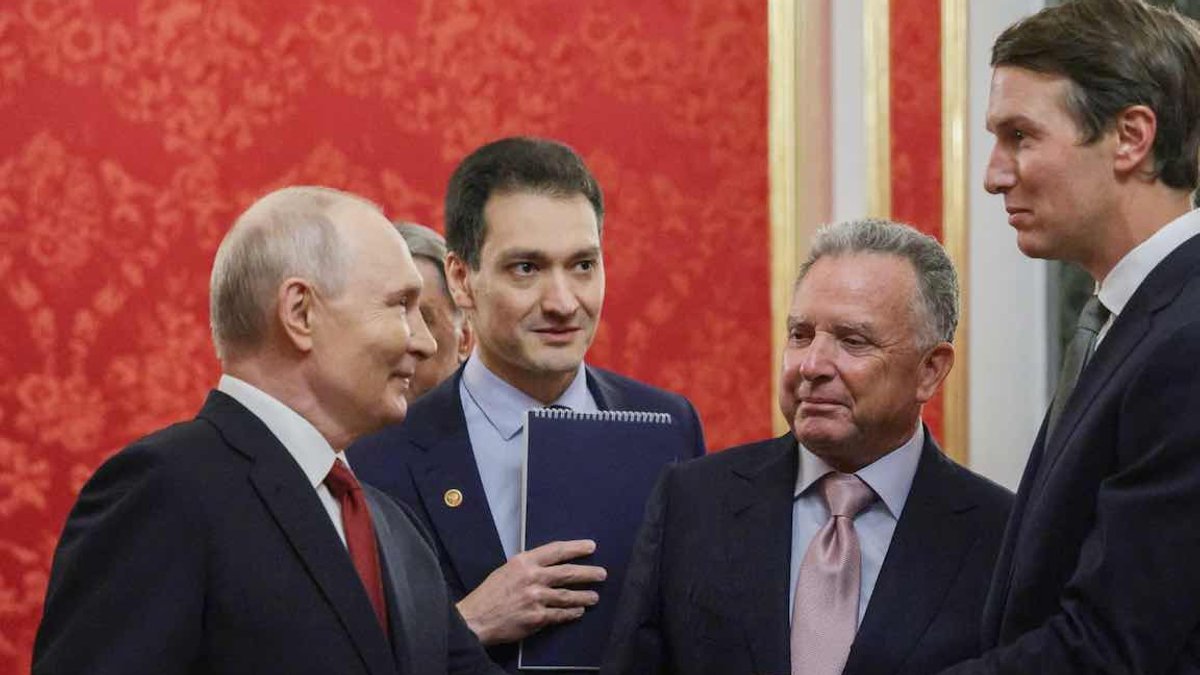
President Donald Trump is attempting to restart negotiations aimed at ending Russia’s war in Ukraine, sending special envoy Steve Witkoff and Jared Kushner to Moscow and Kyiv with a “concrete peace proposal.”
Witkoff and Kushner met Russian President Vladimir Putin in the Kremlin on Saturday. Putin called the situation “difficult” but said contacts with Washington were useful. Russia and Ukraine also agreed to refrain temporarily from strikes on each other’s capitals while the American delegation conducts its diplomatic mission.
The limited truce is the clearest immediate result of the latest effort. It is not, however, a broader ceasefire, and the fundamental issues that have blocked previous negotiations remain unresolved. Russia continues to demand Ukrainian territorial concessions and the abandonment of Kyiv’s NATO ambitions. Ukraine has rejected those terms.
The new mission represents less a fresh peace process than the revival of a diplomatic effort that stalled earlier this year.
A history of failed diplomacy
Trump began his second-term Ukraine diplomacy with direct telephone conversations with Putin and Ukrainian President Volodymyr Zelenskyy. U.S. and Russian officials subsequently met in Riyadh on Feb. 18, 2025, marking the beginning of a new American effort to establish negotiations.
The talks immediately generated controversy because Ukraine was not represented in the first U.S.-Russia meeting. Trump then pushed Moscow and Kyiv toward a broader ceasefire. After U.S.-Ukraine discussions in Saudi Arabia, Kyiv agreed to a proposed 30-day ceasefire. Russia did not accept the proposal in full. Instead, Moscow agreed to narrower measures involving attacks on energy infrastructure and later discussions concerning the Black Sea.
Related: Trump Faces Growing Political Problems
By April, frustration inside the Trump administration had become public. Secretary of State Marco Rubio said Washington was prepared to abandon the mediation effort unless there was rapid progress. Trump similarly warned that the United States could “take a pass” if either side made an agreement impossible. This was one of the clearest moments when Washington threatened to end its involvement.
European governments were concerned that Trump might leave the negotiations before Russia had made meaningful concessions. Trump subsequently pushed Moscow and Kyiv toward direct negotiations. The most significant result was a series of Russia-Ukraine meetings in Istanbul in May and June. The talks produced a major prisoner exchange but failed to produce a ceasefire or political settlement.
Trump announced in May that Russia and Ukraine would begin immediate negotiations following his call with Putin, but the two sides remained far apart.
Shuttle diplomacy and summits
Trump then intensified his personal diplomacy with Putin. Witkoff made repeated trips to Moscow before Trump and Putin met in Alaska in August 2025. The Alaska summit was one of the most important moments of Trump’s peace effort, but it ended without a ceasefire agreement. European leaders nevertheless welcomed Trump’s willingness to engage Putin. In a joint statement, the leaders of France, Germany, Britain, Italy, Finland and Poland, together with senior EU officials, said they welcomed Trump’s efforts to stop the fighting and pursue a “just and lasting peace.”
But Europe also established important limits. The leaders insisted that Ukraine’s sovereignty and territorial integrity had to be protected and that Ukraine could not be excluded from decisions concerning its future. They also rejected the idea that Russia should have a veto over Ukraine’s European or NATO aspirations.
After Alaska, Trump attempted to move toward a direct meeting between Putin and Zelenskyy, followed by a possible trilateral summit involving all three presidents. The initiative failed to produce the expected breakthrough. In October, Trump cancelled a planned meeting with Putin in Budapest, saying that the timing was wrong and that there had been insufficient diplomatic progress. He said the meeting “didn’t feel right” because the two sides were not getting to the point necessary for an agreement.
Related: Broker Networks Offer Clear Benefits for Agents
Trump’s diplomatic efforts have produced several limited agreements and humanitarian results, including prisoner exchanges and temporary arrangements concerning energy infrastructure. The most important tangible achievement has been keeping direct negotiations alive between Russia and Ukraine. The talks have also produced major prisoner exchanges. The negotiations in 2025 and 2026 demonstrated that Moscow and Kyiv can reach narrow agreements even when they cannot resolve the central political dispute.
Trump has not achieved a general ceasefire or a peace agreement. The March 2025 energy and Black Sea arrangements were partial measures, not an end to the war. The Istanbul negotiations produced prisoner exchanges, not peace. The Alaska summit produced no ceasefire. The later U.S.-brokered negotiations also failed to resolve the territorial question.
Why the current effort is different
The current diplomatic push follows a series of setbacks that left the peace process dormant for months. In November and December 2025, the administration moved toward a more detailed written peace framework. A U.S. proposal initially containing 28 points generated substantial criticism in Ukraine, Europe and Washington because critics said it gave Russia too many concessions. Republican lawmakers, including Sen. Roger Wicker and Rep. Don Bacon, publicly criticized elements of the plan and questioned whether the proposal rewarded Russian aggression.
The document was subsequently revised. By December, American, Ukrainian, Russian and European officials were working around a revised 20-point framework. Negotiators reported progress on security guarantees, economic reconstruction and other issues, although territory remained unresolved.
Witkoff and Kushner have become deeply controversial figures in Ukraine because many Ukrainians fear that Trump’s unconventional negotiating team is more focused on reaching a rapid agreement with Putin than on securing a settlement that Kyiv considers militarily and politically safe. The diplomatic process continued into 2026. In January, Witkoff and Kushner met Putin and discussed further U.S.-Russia-Ukraine negotiations. Territorial disputes remained the central obstacle. In early February, Russia and Ukraine held another round of U.S.-brokered negotiations in Abu Dhabi. The talks were described by Ukrainian officials as productive, but there was no full settlement. On Feb. 17-18, the negotiating process moved to Geneva, where Witkoff and Kushner again represented the Trump administration.
Those were the last U.S.-mediated Russia-Ukraine peace talks before the latest September initiative. After months in which the diplomatic process largely stalled, Trump has now restarted the effort. Witkoff and Kushner arrived in Moscow on Saturday and met Putin. They are scheduled to travel to Kyiv for talks with Zelenskyy. Trump said the envoys were carrying a “concrete proposal” to end the war, although the administration has not publicly disclosed its full contents.


