


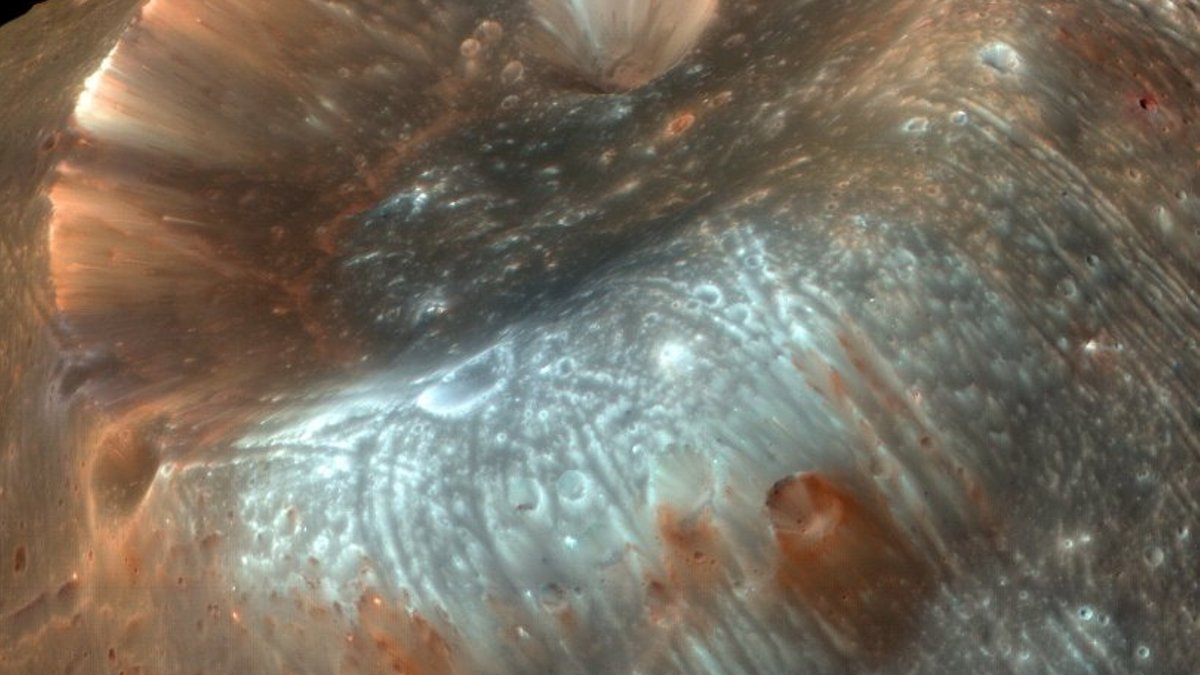
Japan has launched an unmanned probe to collect material from Phobos, a moon of Mars, and return it to Earth, as reported by CNA on October 18. The mission, called Martian Moons eXploration (MMX), aims to shed light on the formation of the Solar System and the origins of life on our planet. This ambitious project marks Japan’s first attempt at a return journey to the Martian system, with the probe set to gather key data and samples from Phobos.
The probe, carried by an H3 rocket, launched from the Tanegashima Space Center at 4:41 a.m. on October 20, as confirmed by JAXA. It is expected to reach Mars by August 2027, embarking on a journey that will test the capabilities of both the spacecraft and its mission team.
A First for Japan, a Race for Mars
MMX is Japan’s pioneering effort in the Martian system, focusing on Phobos while the US and China aim to retrieve samples directly from Mars. China’s Tianwen-3 mission, scheduled for 2028, plans to return samples by 2031, potentially outpacing MMX. The US, meanwhile, faced setbacks when NASA’s sample return effort was canceled by the Trump administration following a congressional vote in January.
Read Also: India protests spark regime change fears
The probe will orbit Phobos, which sits roughly 6,000 km above the Martian surface, and deploy the IDEFIX rover to identify a safe landing site. Over three years, it will collect at least 10 grams of surface material. Additionally, the probe will observe Deimos, Mars’ other moon, without landing, providing valuable insights into both moons’ characteristics.
This mission is a collaborative effort involving JAXA, CNES, DLR, NASA, ESA, and approximately 20 universities and technology companies. The international partnership shows the global significance of the MMX mission.
Scientists are particularly interested in determining whether Phobos and Deimos are captured asteroids or remnants of a collision with Mars. This distinction could provide critical clues about how planets like Earth acquired essential components for life, including water and organic compounds. French astrophysicist Patrick Michel, involved with the IDEFIX rover, noted that the mission could clarify how these vital elements reached the inner rocky planets from the outer Solar System.


