


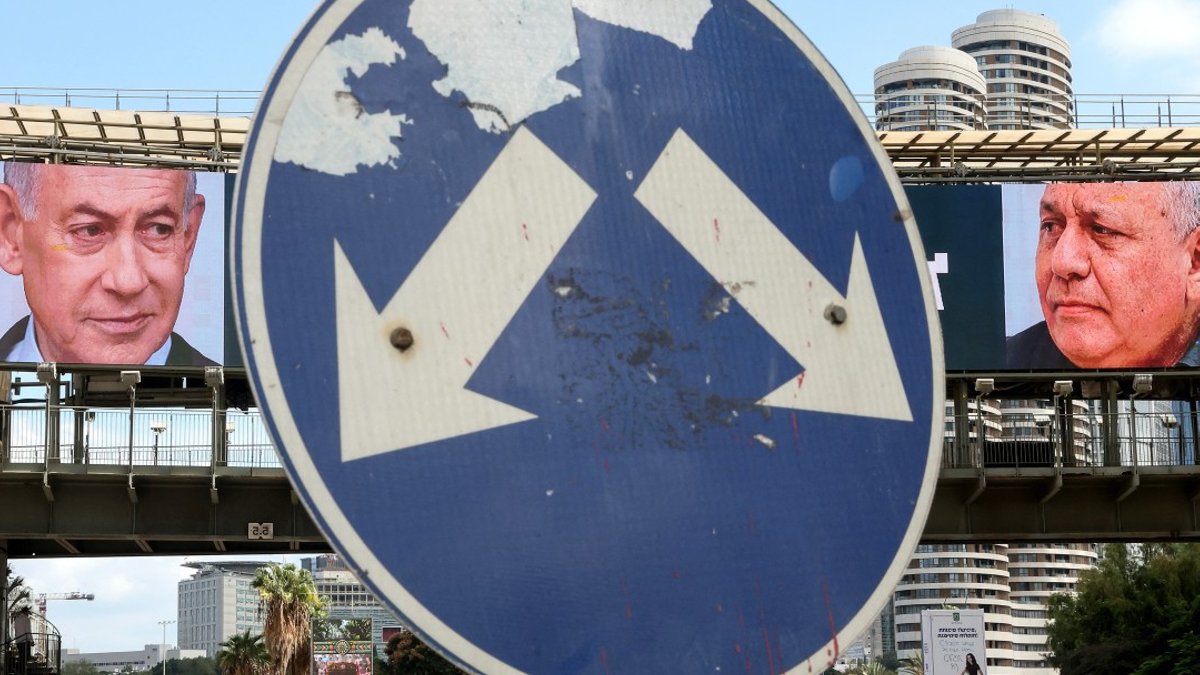
President Isaac Herzog announced on Thursday that he will soon name the Knesset member who will try to assemble a new government after the October 27 election left no clear majority. The president’s constitutional authority includes selecting a lawmaker who appears most capable of gathering enough support to command a parliamentary majority.
Mandate Decision
Former army chief Gadi Eisenkot emerged with the highest level of support among parliamentarians, according to the president’s consultation tally. In the vote, 67 lawmakers backed Eisenkot, 46 favored Benjamin Netanyahu, and 7 abstained. Herzog said the law gives him discretion to appoint the person best able to build a coalition, noting that “mutual vetoes between the blocs and within the blocs themselves” complicate the choice.
Herzog added, “I will try to determine this directly and quickly, in personal talks with some of the party leaders.”
Read Also: Police wiretapping scandal exposes surveillance safeguard gaps
Coalition Structure
Eisenkot’s Yashar party said on Thursday that “the citizens of Israel have chosen change and expressed a complete lack of confidence in outgoing Prime Minister Netanyahu and his government,” and called for the “immediate establishment of a national emergency government that will begin working for all citizens of Israel.” Two Arab-majority lists together secured an unprecedented 19 seats, positioning them as potential kingmakers. Both groups announced Thursday that they would back Eisenkot’s bid.
The right-wing Israel Beiteinu party warned it will not join a cabinet that relies on support from these groups. Party leader Avigdor Liberman cited the Arab lists’ refusal to label Hamas explicitly as a “terror group” as a deal-breaker, emphasizing his party’s stance on security and national identity.
Ultra-Orthodox faction United Torah Judaism declined to recommend Netanyahu again and also stopped short of endorsing Eisenkot. In a statement, the party said it will not propose any Knesset member to form a government, showing its independent position in the negotiations.
Religious Exemptions
United Torah Judaism and the Shas party continue to press for maintaining the exemption that allows religious students to avoid military service. Lawmaker Isaac Pindrus said the next government’s “immediate item is sorting out the status of Torah students.” Eisenkot has been adamant about ending exemptions for military service. Some of his opposition allies have criticized the ultra-Orthodox—who make up about 14 percent of the population but have far higher birthrates than secular Israelis—as a drain on the state.
Read Also: Helicopter Crash During Firefighting Mission Kills One in Borneo
Timeline and Seat Count
Once Herzog assigns the mandate, the appointed lawmaker has 28 days to form a cabinet, with a possible 14-day extension. Failure to do so will trigger a new appointment, as stipulated by the governing rules.
Netanyahu’s bloc, including United Torah Judaism, has 53 seats in the new parliament, compared to 48 for Eisenkot’s bloc. Arab-majority parties scored historic gains on the back of anger over Netanyahu’s hard-right government and longstanding complaints about racism from some ministers and discriminatory treatment of Arab Israelis.
Netanyahu has publicly denounced any alliance with Arab legislators, alleging “serious suspicions” of foreign funding in the election and questioning the loyalty of Arab citizens in a recent video statement.


